

Credit: Opus Film
It’s difficult not to compare Paweł Pawlikowski’s “Cold War” to his 2013 film “Ida” due to their shared black and white cinematography and 4:3 aspect ratio, but that is where the similarities between them end. Although I prefer “Ida” thematically (I’m not much of a romance person), “Cold War” is a directorial improvement for Pawlikowski in many ways.
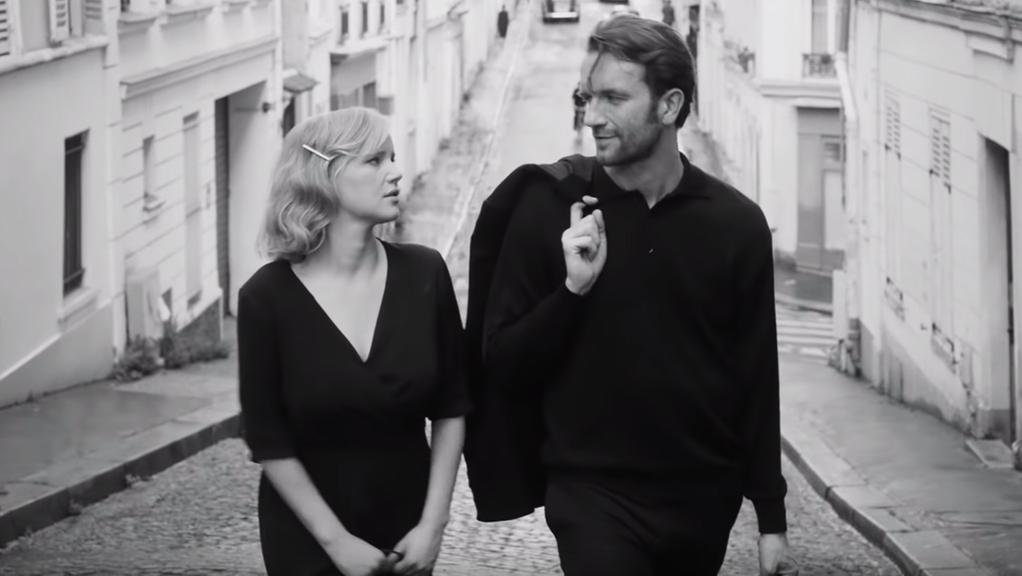
While the cinematography in “Ida” was appropriately minimalistic, the camerawork in “Cold War” is ambitious and rich with life, much like the characters and music that the film centers on. I cannot emphasize just how impressive and — yes, I will repeat myself — ambitious the cinematography is, especially in the dance and concert scenes. The camerawork is executed so flawlessly and with meticulous precision (for the first time in my life, I can’t complain about a film being out of focus), yet it it has a graceful fluidity that does not seem overly planned. In a similar vein, the shot composition seemed to be more naturalistic while still maintaining form, and I appreciated the variety of shot perspectives that “Cold War” offered. (Not to mention that as a pianist myself, those shots of the pianist’s hands reflected on the fall-board made me squeal internally with delight.) All things considered, the cinematography of this film left me truly lost for words, and it is something I will likely ramble on about until the end of my days.
As if its visual presentation weren’t impressive enough, the less technical aspects of “Cold War” knocked me off my feet. I can’t express just how masterful Pawlikowski’s attention to detail is. The contrast among the styles of music, sets, and overall tone in France and Poland bring discernible atmospheres to the settings without being in-your-face, while the makeup and performances brought so many subtle elements that elevated the emotional arc of the film. In particular, Joanna Kulig’s performance as Zula was filled with so much nuance, from her evolution in facial expressions to her changing singing style. To counterbalance her electric performance, Tomasz Kot played her lover, Wiktor, with a collected and oft-frigid flair. And the score and choreography, of course, were impressively well-executed and complemented the film perfectly.
With so much going for it, Pawlikowski sets the stage for a masterpiece, which “Cold War” regrettably is not. My biggest issues with this film are the story and the way it is told. One moment, the film shows the protagonists crushing on each other, the next, they have sex, and then the story cuts to two years into their relationship. This leaves the audience with a huge gap in the progression of their relationship and any opportunity to introduce any meaningful themes in their love story (aside from the “Hearts” song, which ultimately serves no purpose to the narrative). As a result, “Cold War” leaves you wondering what exactly these characters love about each other and what the nature of their relationship is like, which hinders the emotional impact of their separation. It was quite honestly difficult to care for the protagonists’ relationship, and the editing did not help either. In one particular scene wherein the characters argue, the scene just cuts to black at the height of their tension, which hampers any potential pivotal emotional moment the film could have had.
Credit: Opus Film
Another thing I did not enjoy was an instance of dialogue in which the main characters discuss why Zula did not escape the first time, and she mentions her concern with her unworthiness, which is something that is never touched on again in the film. Similarly, another aspect of the characters that seemed a bit unfounded was Wiktor’s progressive dismissiveness of Zula, which was completely inexplicable in my opinion and further muddled their already confusing relationship. Lastly, I unfortunately did not like how this film ended. It felt like the director was just trying to emphasize how tragic this star-crossed love was by having the characters die by suicide. From what I could tell, there really was no reason for them to die if they were keen on escaping again. This isn’t the only instance in which I was left baffled by character decisions — in fact, I found numerous actions that the protagonists took in pivotal moments of the film to be confusing given the context of the situations.
However, there were other moments of storytelling and dialogue that were executed masterfully. My favorite is probably one of the bathroom scenes, in which the screenwriters took the “character is saying what they feel instead of showing it” cliche and actually made it purposeful. I am referring to the scene in which Zula gets drunk and talks to herself about her feelings for Wiktor and the start of their emotional issues. Her intoxicated state justifies this moment of dialogue while simultaneously revealing aspects of her character and her feelings that could not have been revealed in any other way, all the while propelling the story forward. This was something I found impressive (I really am running out of words to express my admiration for this film).
One last thing that is imperative for me to mention is the politics of this movie. While the politics of the Cold War don’t overshadow this film’s central romance, the conflict itself inevitably plays a prominent role in the main story. And even though the film is set in Cold War-era Poland, Pawlikowski touched the subject matter and setting with such grace that I never felt any sort of bias. Instead of romanticizing any side of the conflict while demonizing the other and creating caricatures as a result, Pawlikowski simply portrayed how people lived at the time time and what characters thought of the conflict, which I think is nothing short of commendable.
Despite its issues, the strengths of “Cold War” more than make up for its flaws and are a reminder of just why I love its director’s approach to filmmaking so much. Pawlikowski’s latest takes its director’s quirks and strengths and blends them into what is arguably his greatest work to date.

 C.S. Harper